


Sierras y Colores
Preservation Efforts

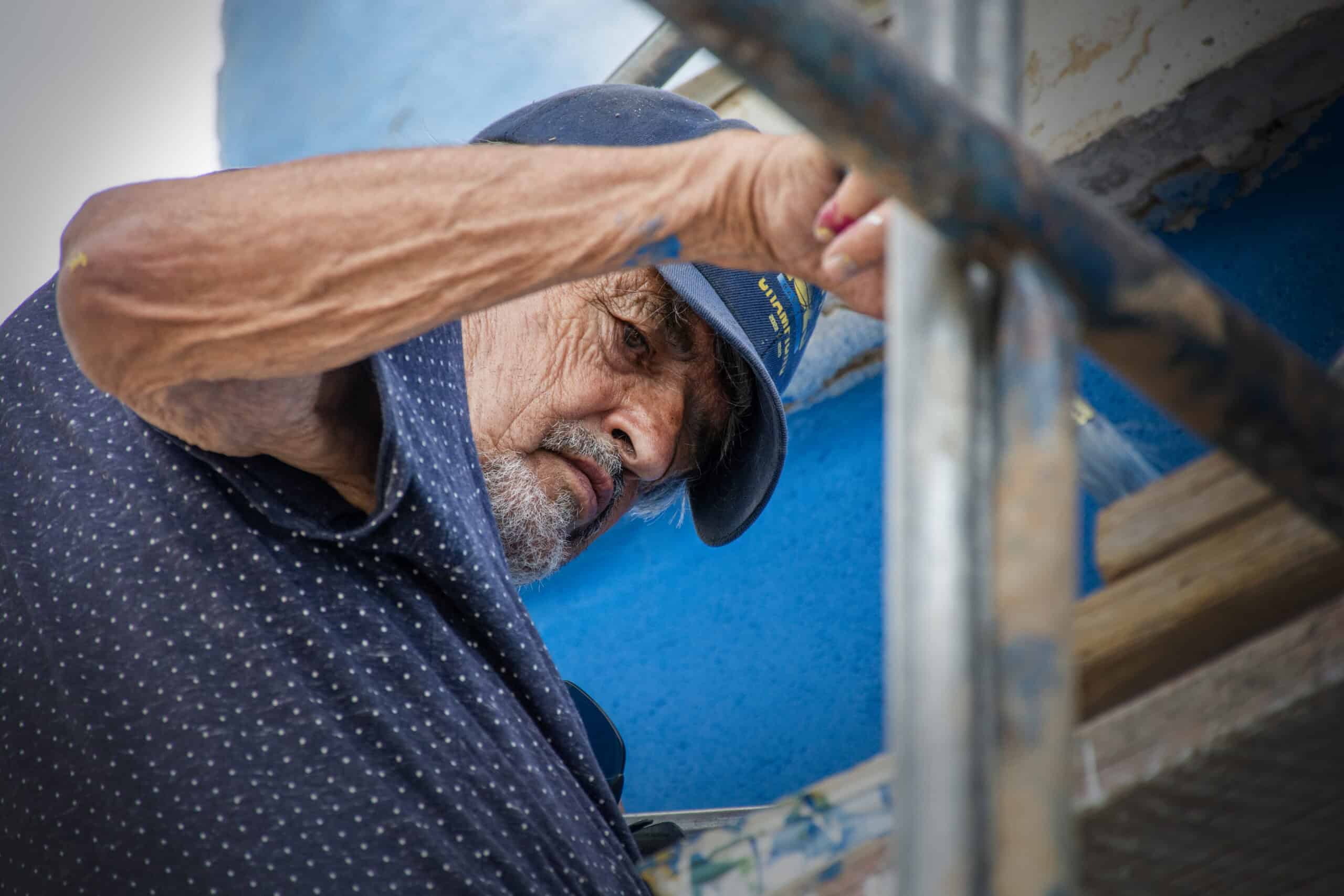


Sierras y Colores during restoration, 2026. Artist Carlos Sandoval with August and Edward Sandoval.
Photo by Teddy Leinbach.
Voices & Stories
Artist Carlos Sandoval reflects on his life, creative practice, and artistic journey.

Carlos Sandoval, 2022. Courtesy of DragonFruit Video
The Mural Today

Sierras y Colores, Carlos Sandoval, 1986. Main Street, San Luis, Colorado.

Mural Themes

Related Murals and Collections

Urban Dope, Rural Hope

Ways of remembering

Urban Dope, Rural Hope
From the Archive
Detail of Urban Dope Rural Hope, Denver, 1977. Emanuel Project Archive
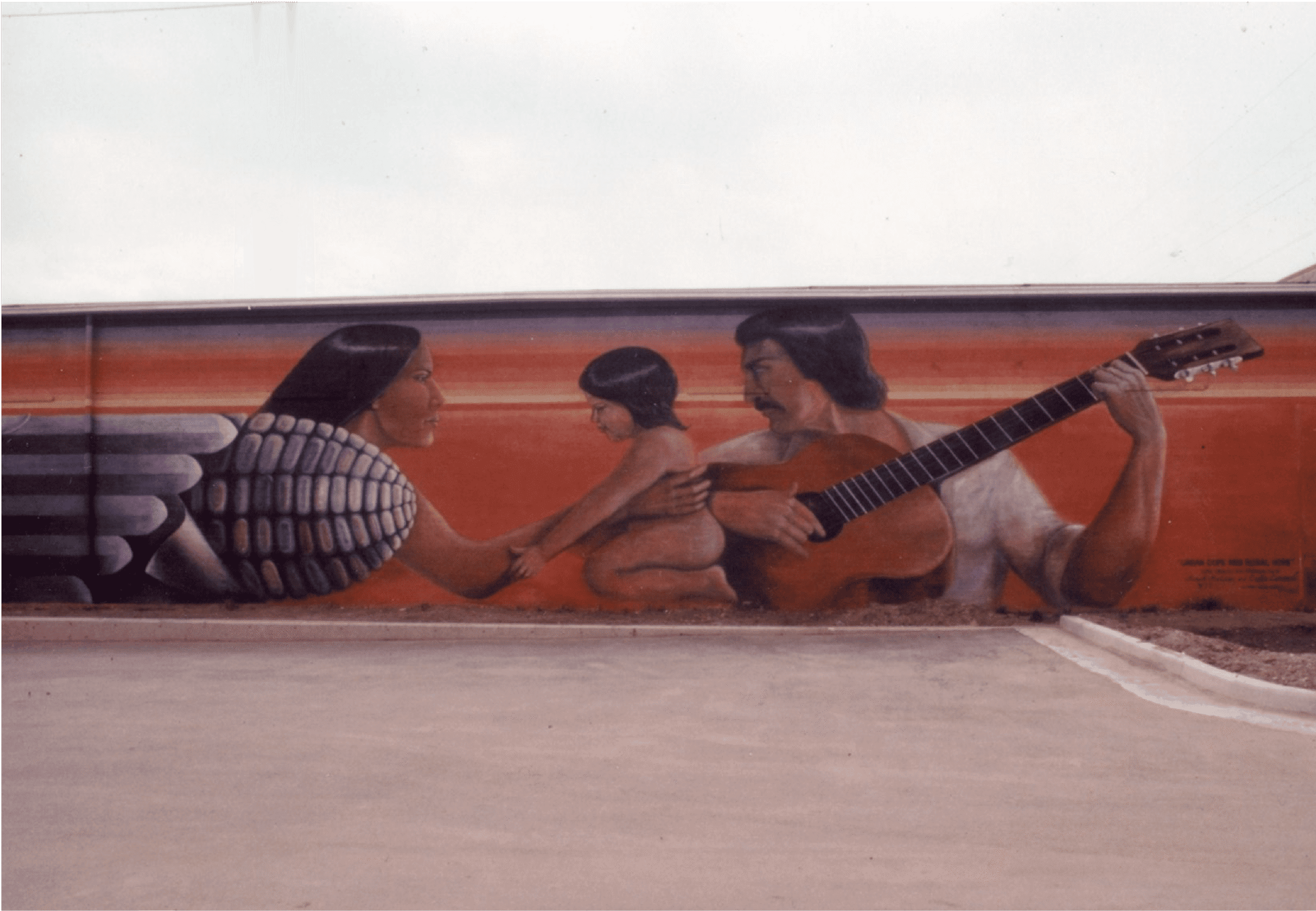
Detail of Urban Dope Rural Hope, Denver, 1977. Emanuel Project Archive
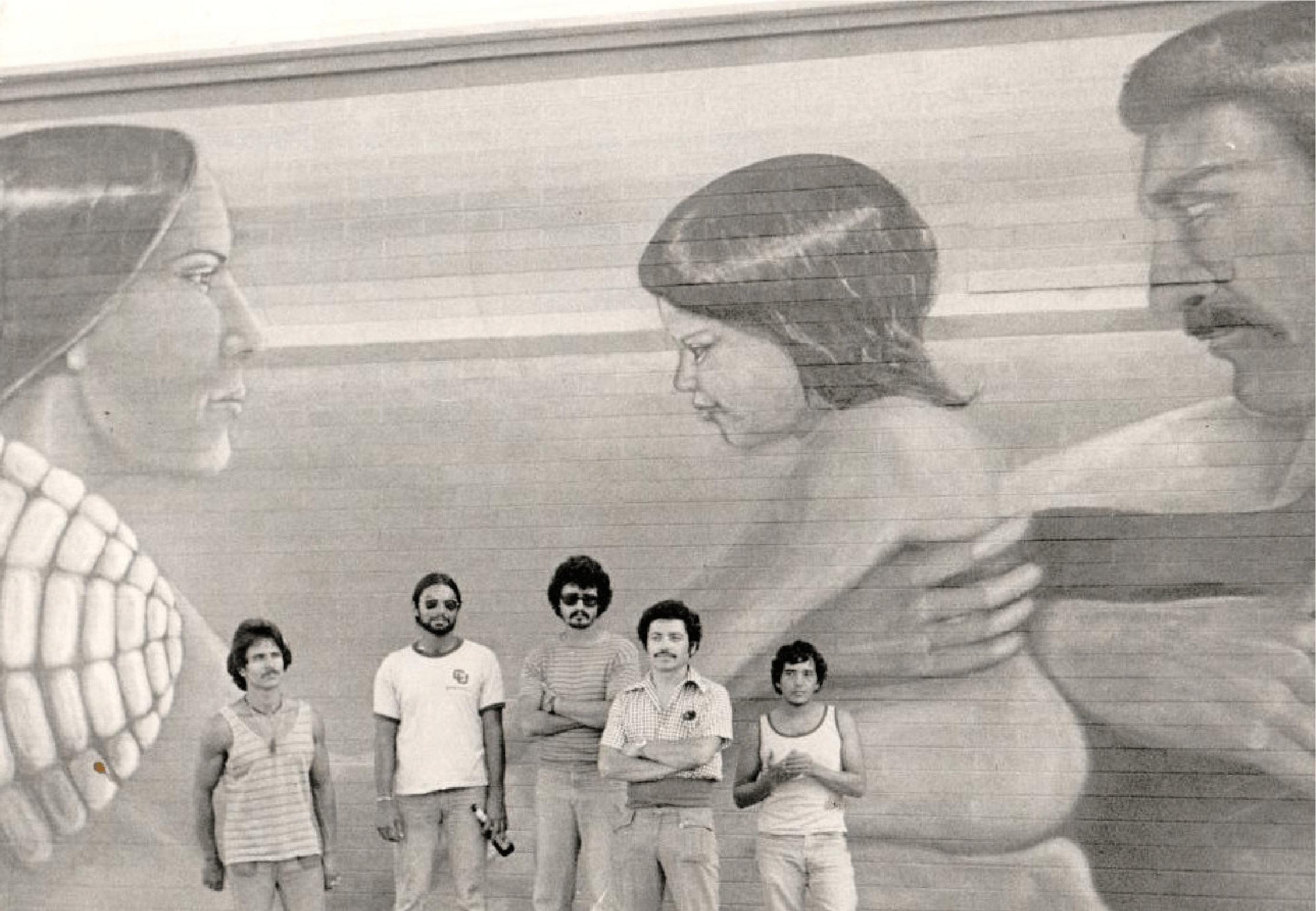
Urban Dope Rural Hope mural with artists Emanuel Martinez, Elfego Baca, Roberto Roybal, Carlos Sandoval, Ernie Gallegos, Denver, 1978. Emanuel Project Archive
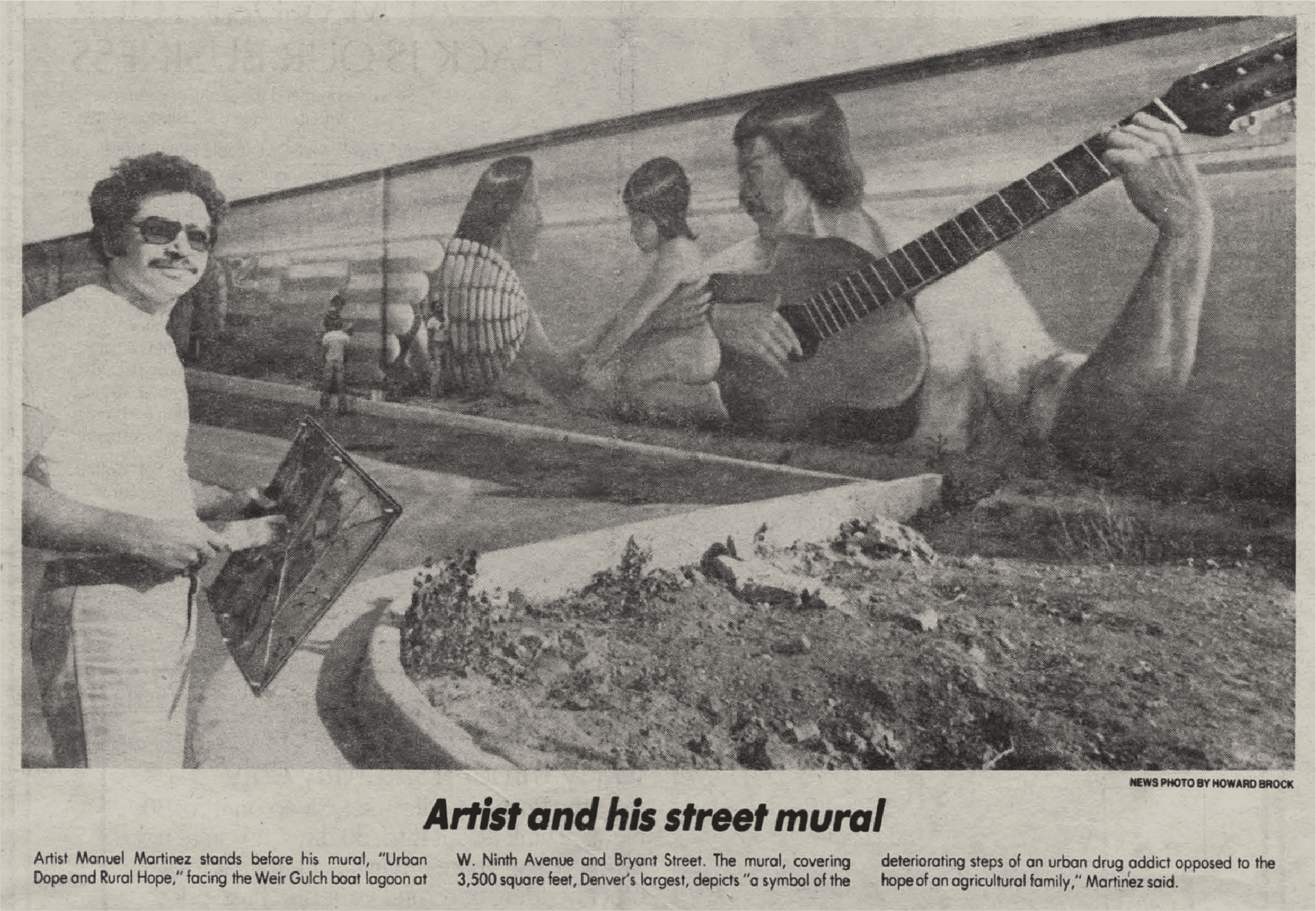
Artist and His Street Mural.
The Rocky Mountain News (Daily), Volume 119, Number 159 · September 28, 1977. Emanuel Project Archive

Take a Look
Includes Urban Dope, Rural Hope on page 10.
Voices & Stories

Listen
Artist Emanuel Martínez reflects on creating Urban Dope, Rural Hope
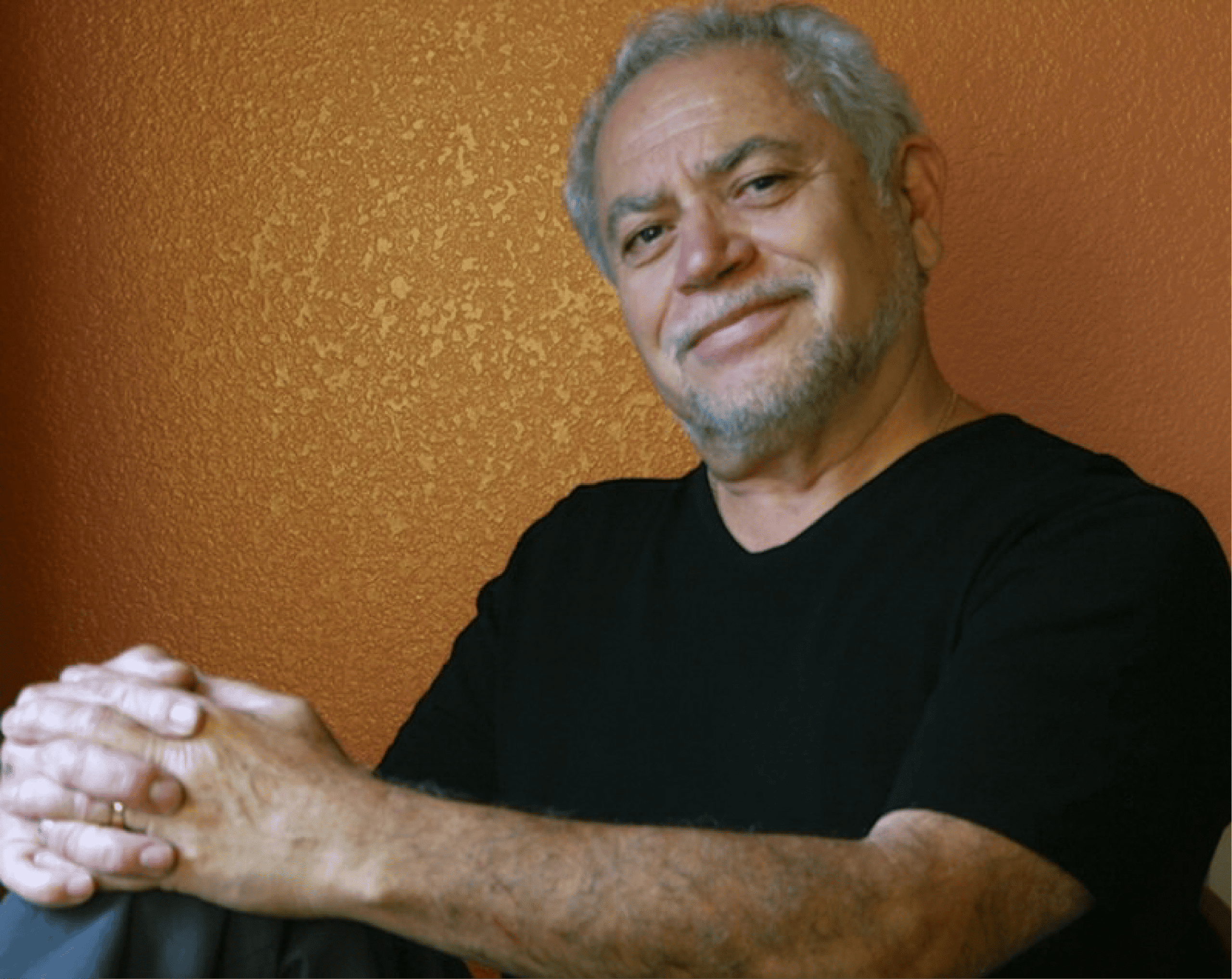
Emanuel Martínez. Emanuel Project Archive
The Mural Today
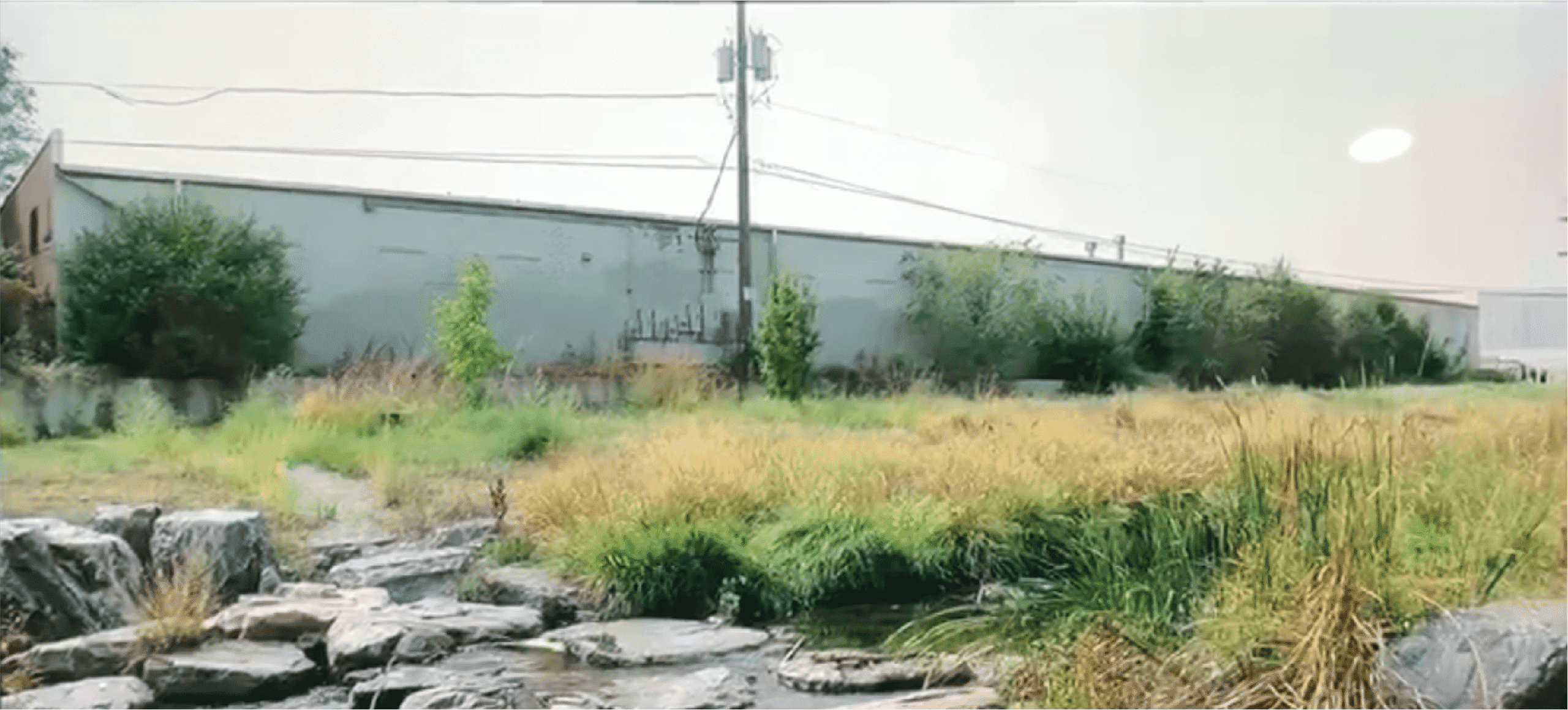
Urban Dope Rural Hope, Denver, 2023. Emanuel Project Archive
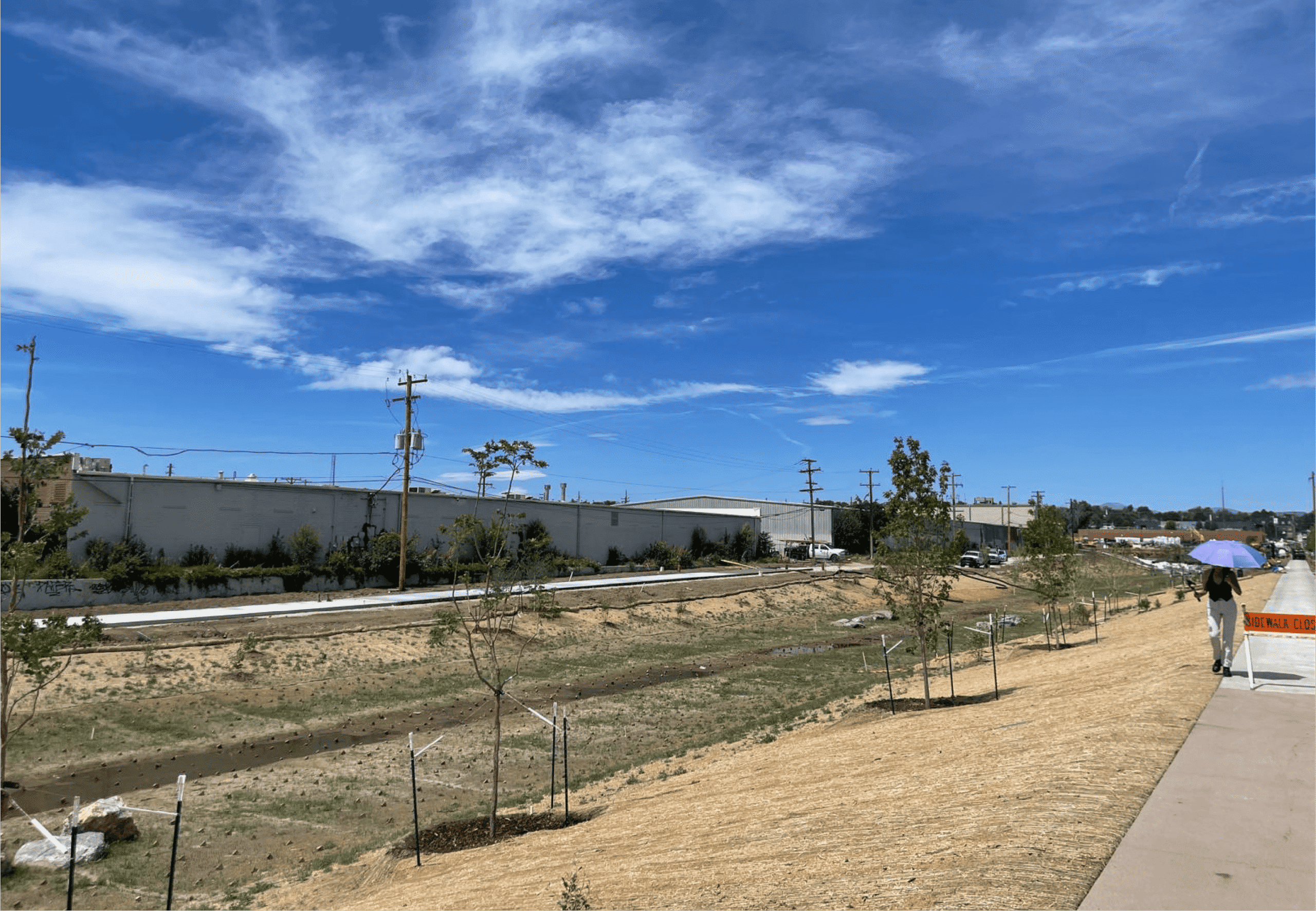
Urban Dope Rural Hope, Denver, 2026. Emanuel Project Archive
Mural Themes
Related Murals and Collections
Urban Dope, Rural Hope
Ways of remembering
Ways of remembering
COLLECTION
Ways of
Remembering
So then, how should the histories of the Chicana/o/x Movement and La Alma and Auraria’s forms of community organizing be represented and kept alive?
Storytellers put forth many ways they want neighborhoods’ lessons and accomplishments to be remembered—many are currently involved in projects to carry out their preservation desires.

Memorializing Collective Efforts as Tools for the Future
Many storytellers want the modes of remembering La Alma and Auraria’s pasts to be harmonious with the…
Listen to Lucha Martínez de Luna on remembering Auraria’s social justice and activism


Centering Stories of Joy and Flourishing
Ms. Prieto is also critical of accounts of history that focus on the violence inflicted on the…
Listen to Cathy Prieto on how La Alma should be remembered

The Historic Cultural District and Remembrance
In some ways, the La Alma Historic Cultural District Designation also can act as a way to mark space—that is…
Listen to Helen Giron-Mushfiq on the La Alma Historic Cultural District Designation


Memorializing Collective Efforts as Tools for the Future
Many storytellers want the modes of remembering La Alma and Auraria’s pasts to be harmonious with the long-held values of the communities. Mrs. Martínez de Luna and Ms. Giron-Mushfiq expressed that histories of past community organizing should be told from the people’s perspective rather than individual leaders. Mrs. Martínez de Luna discussed how Aurarians’ efforts to stop AHEC’s mass displacement are often under-recognized now:
“If you don’t remember these times and spaces and these moments, where the periods of social justice and activism were happening, you forget about them. And then we start the whole cycle all over again.”
Lucha Martínez de Luna
Listen
Lucha Martínez de Luna on remembering Auraria’s social justice and activism
Historic preservation is necessary for current community organizing. In addition to being remembered, she explained that it’s important to tell the story of the collective in a way that connects to broader histories of indigenous cultures that pre-date colonization:
Listen
Lucha Martínez de Luna on collective history and control of narratives
“It’s always either the victors or the elites that are trying to control history and the narratives that are told. And that happens repeatedly, in prehistory and history. And the activists have to keep fighting just to hold on to their stories.”
Lucha Martínez de Luna
Ms. Giron-Mushfiq also talked to me about the importance of grassroots histories. She helped organize a community event in June 2021 called “the Day of the Unsung Warrior,” in order to honor
“...the people who traditionally aren’t recognized for their participation in the movement... That’s why they have such a limited knowledge of the Chicano and Chicana Movement, because they rely on this very narrow narrative... Everything’s around Corky Gonzales [a leader of the Crusade for Justice], and I’m not taking anything from him but, him and his family should not erase the thousands of others who actually were part of that movement too.”
Helen Giron-Mushfiq
Listen
Helen Giron-Mushfiq on the Day of the Unsung Warrior and grassroots histories
By adding onto dominant narratives about the Chicana/o/x Movement, remembering the power of the many gives a fuller picture of the era’s expansive organizing.

Centering Stories of
Joy and Flourishing
Ms. Prieto is also critical of accounts of history that focus on the violence inflicted on the neighborhoods during the Chicana/o/x Movement. When talking about the La Alma Historic Cultural District Designation, she said:
“I keep thinking about that, what took them [preservationists and city officials] so long to recognize [the value of La Alma], and why do we have to use what happened–because that was a bad time... [During the movement,] I got hurt... I got beat by police.”

Cathy Prieto
Listen
Cathy Prieto on how La Alma should be remembered
Ms. Prieto wants La Alma to be remembered for the good, rather than being singularly defined by pain, police violence, and systemic racism. There are rich, complex, and hopeful histories that account for the meaningful connections between neighbors, across generations, and to particular places in the West Side.
Another example of efforts to preserve the fullness and love of the neighborhoods is the fight to preserve Casa Mayan as a museum of Mr. Alcaro’s family and Auraria. Mr. Alcaro told me about his hopes for the house and how it can be both a means to connect with others and to understand aspects of history that Aurarians do not want to repeat:
Listen
Gregorio González Alcaro on his hopes for Casa Mayan
“Casa Mayan will be a beacon, it will be what it was when my family came here, it will be a refuge, an oasis, for people to be treated decently and to learn about other cultures, to share equality, love, compassion... [it will also be a place for people] to understand the displacement of people, the politics of space, gentrification ... just the ugliness that we have to learn from.”

Gregorio González Alcaro
Throughout the interview, Mr. Alcaro emphasized that he wants to further Casa Mayan’s history of including everyone. But now he feels like its nuances are being stripped away by individuals picking apart what happened there for personal gain, rather than keeping alive Casa Mayan’s original goals of collective flourishing.
“It’s a beautiful story that we want to promote... This is not about victimhood.”
Gregorio González Alcaro
Listen
Gregorio González Alcaro on preserving the fullness of Casa Mayan’s history
The Historic Cultural District and Remembrance
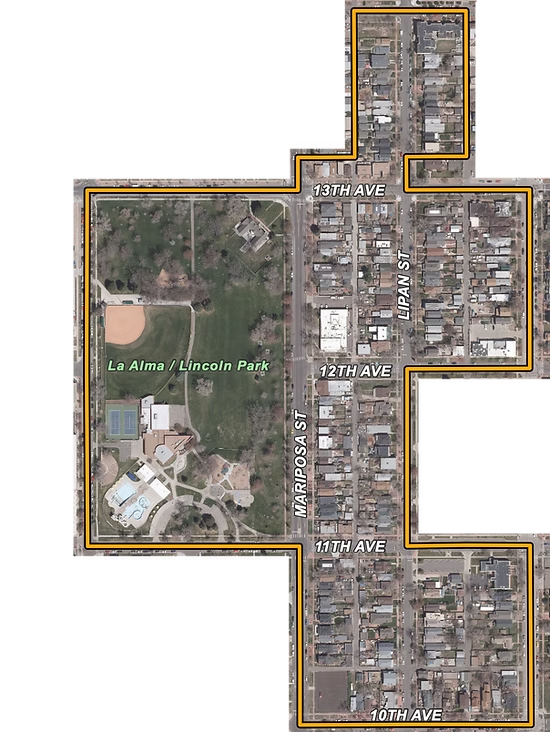
In some ways, the La Alma Historic Cultural District Designation also can act as a way to mark space—that is otherwise rapidly shifting with urban development—with the long-term ties people have to place and each other.
Ms. Giron-Mushfiq described how being involved in the work to pass the designation cemented her lived experience of the neighborhood. Now urban developers or gentrifiers cannot alter 12 blocks in La Alma:
“The houses can never be changed on the outside, and I don’t care how much money you have, you can’t change the characteristics of the housing. And [the architecture] holds a lot of the history and a lot of the soul... of the home itself, like ‘that’s where what’s-her-name used to live,’ and people recognize it because it hasn’t really been that changed.”
Helen Giron-Mushfiq
Listen
Helen Giron-Mushfiq on the La Alma Historic Cultural District Designation
Long-time residents’ ties to space and each other can continue to flourish because of how the designation solidifies the appearance of the neighborhood. Long-time residents’ lived experiences are also recognized as history worth preserving, as the maintained homes act as a reminder of the collective power that took place in La Alma’s past and continues today.
People gathering together around a shared goal propelled the project toward success. Mrs. Martínez de Luna described how some long-time residents of La Alma were initially skeptical of the designation because communities of color have historically not been involved in preservation projects. But once they were able to bridge with Historic Denver and more-recent residents (who initiated the designation project), they were able to ask questions and understand their motivations:
Listen
Lucha Martínez de Luna on collective work to protect the neighborhood
“In many respects, this was an amazing project... it all fell into place because it was about the neighborhood. It wasn’t about anybody [in particular]; it was just about the neighborhood and how we protect this. And everyone just came together and made it happen.”
Lucha Martínez de Luna
She sees the collective positive power behind the project as what propelled it forward. But simultaneously, there is more to be done in terms of preventing the Whitewashing of the space and murals, as seen in Five Points– Denver’s other Historic Cultural District. Mrs. Martínez de Luna also reflected on a lingering challenge with historic preservation: representing the neighborhood’s expansive and rich history.
“... you consider the whole history. We’re not just talking about even the Chicano Movement, but we’re recognizing the fluidity of a community and recognizing everybody that’s in that community at any given time... And not just focusing on the negative and the systemic racism, but really celebrating the individuals that once lived there.”
Lucha Martínez de Luna
Listen
Lucha Martínez de Luna on representing the whole history of La Alma
This vision of a shared and holistic history adds complexity to how the meaning of place is remembered, in which all the people with ties to the land of La Alma and Auraria are connected to one another.
Some Closing Thoughts
Storytellers of this project pass on knowledge for how to remember and move toward a hopeful and vibrant future: by centering grassroots histories of the many, memories of joy, fostering community, marking spaces with meaning, and recognizing the expansiveness of history.
Remembering the past can be both a celebration of accomplishments and a tool for future self-determination and kinship.
Long-time residents’ desires and love for each other and their neighborhoods can fuel a project bigger than just survival within oppressive systems, where community members can flourish together and create new worlds not yet imagined. I hope this project can nourish long-time residents’ ongoing community organizing efforts that seek to remember the neighborhoods’ pasts, create generative alternatives to oppressive violence, and connect with one another through a shared sense of belonging to La Alma and Auraria.
These Stories are part of the Collection
Community Voices: La Alma, Auraria and North Side, created by Lia Musante

Sharing Knowledge and Power with Young People
COLLECTION
Sharing Knowledge and Power with Young People
Storytellers often emphasized sharing wisdom and responsibility with youth. Passing on skills or lessons from lived experience in community organizing is another way that the emotional attachments to La Alma and Auraria can transcend time.
Ms. Prieto and Ms. Giron-Mushfiq told me about learning from older people in their lives, such as Ms. Prieto’s activist mother or a Chicano neighbor Ms. Giron-Mushfiq met in her 20s while getting the vote out to seniors in the housing projects (audio clips for both stories below). Just as long-time residents learned from their elders, many value teaching young people themselves.
Listen to Cathy Prieto on learning from her activist mother
Helen Giron-Mushfiq on learning from a Chicano neighbor while organizing senior voters

Participatory Murals with Andy Mendoza
While painting murals in collaboration with children in Denver schools, Andy Mendoza talked about the fulfillment he…
Listen to Andy Mendoza on teaching students to paint murals

Being an Educator and Mentor
Karma Leigh told me about how educating children and collaboratively painting murals in schools is linked to her own…
Listen to Karma Leigh on education, family and cultural knowledge

Participatory Murals with Andy Mendoza
While painting murals in collaboration with children in Denver schools, Andy Mendoza talked about the fulfillment he received from teaching kids how to paint and sharing the art-creation process with them. While some muralists in the 80s and 90s would paint a mural alone in a month, Mr. Mendoza would spend a whole school year working with all the students to paint a mural in their school. When he was in grade school, Mr. Mendoza’s art teacher refused to teach students of color, which motivated him to share what he knew with young kids. He guided every student in collectively shaping each mural.

A mural Mr. Mendoza directed in a school cafeteria. Photo courtesy of Andy Mendoza.

Mr. Mendoza guided a Denver Public School student in a Channel 2 News feature, 1996. Photo courtesy of Andy Mendoza.
“... Everybody got to put a piece of the puzzle on the puzzle. I had kids coming up to me saying ‘I don’t know how to paint,’ [and I said] ‘Well this is all you have to do’... I’d be going back and forth, [saying to them] ‘okay, do her dress,’ ‘you’re gonna do his face,’ ‘this is the color you need and these are the colors we use’... I don’t know how [the students] did it but they did. They never painted before or anything... I look back now, I don’t really have any regrets because of that, what I’ve seen in [students’] faces. Even though I’m not rich in that way, I’m rich in another way [from] all the experience I had with the students...”
Andy Mendoza
Listen
Andy Mendoza on teaching students to paint murals

A young painter of the mural on Osage Street. Courtesy of Andy Mendoza.

A mural Mr. Mendoza directed with Linda Clement on Osage Street, across from La Alma Park, called Learning from the Past, Focused on the Future, 1995. The mural tells the story of Auraria. Photo courtesy of Andy Mendoza.

A clipping from Rocky Mountain News featuring the same mural. Courtesy of Andy Mendoza.
Mr. Mendoza chose to teach children how to paint murals because he saw value in connecting with young people so they could be empowered to explore the world of art and co-create their own surroundings.

Being an Educator and Mentor
Karma Leigh told me about how educating children and collaboratively painting murals in schools is linked to her own upbringing and family. As an older sister and someone interested in reclaiming her culture, she became interested in teaching kids and sharing a sense of cultural pride with them:
“I’ve always been an educator because I’m the oldest of six kids, so I was always in charge of the kids, I was always babysitting the kids, cousins... But I also grew up with a very assimilated Mexican family and wanted to learn more about my culture. And by learning more of my culture I really understood the importance of educating people so that culture isn’t stolen from people.”
Karma Leigh
Listen
Karma Leigh on education, family and cultural knowledge
Ms. Giron-Mushfiq also shares power in guiding young people as a mentor of the new Brown Berets chapter. After being a Brown Beret in the Chicana/o/x Movement, a group of Denver youth organically formed and wanted to hear about Ms. Giron-Mushfiq’s experience in March 2021. In weekly Zoom meetings she teaches them about caring for the community:
Listen
Helen Giron-Mushfiq on mentoring the new Brown Berets chapter
“I’m the secretary, which is a good position to be in because it’s a way to mentor and guide without taking on leadership.”
Helen Giron-Mushfiq
By actively avoiding putting herself at the top of a hierarchy, she shares knowledge and power with young people.
Ms. Prieto is a long-time friend of Ms. Giron-Mushfiq, and her insight on the new chapter added on to this idea of learning alongside the next generation. She and Ms. Maestas told me about how the new chapter is fighting to include the Chicana/o/x Movement in Denver Public Schools curriculum. Ms. Prieto said:
“It’s our history that they didn’t let anybody talk about... I was on a Zoom with [the Brown Berets] and I told them that I’m so proud to have yous come out and speak up, because back in the day we’d get knocked out for speaking up. And now you got that door open, and use it, use it! [Ms. Maestas chimes in and says “Yea, they do too.”] And they asked if I would be willing to come back in, and I said ‘I’m not feeling it right now’... It’s for them now.”

Cathy Prieto and Desiree Maestas
Listen
Cathy Prieto and Desiree Maestas on passing the movement to younger Brown Berets
Ms. Prieto is happy to see the Brown Berets continue the efforts she fought for in the Chicana/o/x Movement, and she wants to pass the torch onto the youth so they are in control.
Whether they hear stories from local elders, teach school kids how to collectively paint a mural in their cafeteria, or pass on responsibility to new Brown Berets, many storytellers care deeply about teaching what they know to young people. The experience of elders can then live on in service of the next generation’s wants and needs.
These Stories are part of the Collection
Community Voices: La Alma, Auraria and North Side, created by Lia Musante

Ties to Space and Neighbors Amidst Gentrification
COLLECTION
Ties to Space and Neighbors Amidst Gentrification
Many storytellers told me about their experience of seeing changes in La Alma due to urban development and gentrification. Desiree Maestas explained her conflicting feelings:
"...it is a real drag over here now because they’re putting up all these ugly buildings, they’re blocking the scenes of downtown, people can’t see the mountains anymore. This isn’t even like a neighborhood anymore... Everything’s gone; it’s not what it used to be; it’s not the same around here anymore. But it’s home. It’s your [her mother Ms. Prieto’s] home, and it’s where we all grew up in here [Ms. Prieto’s La Alma house]."

Desiree Maestas
Listen
Desiree Maestas on changes in La Alma and her connection to home
Many of the La Alma businesses and homes she grew up knowing were since replaced by more expensive options. But the sentimental ties that many long-time residents feel toward the neighborhood and previous neighbors persist. While talking about the changes in the last 15 years, Karma Leigh described the feelings coming over her as she reflected on what she remembers of La Alma before its gentrification:
Listen
Karma Leigh reflecting on memories of La Alma before gentrification
“It’s wild. Like even trying to talk about it right now, and like my memories going through all these different periods and blocks...”
Karma Leigh
And in telling me about the significance of the Historic Cultural District Designation, she said that not only does it mark the historical importance of La Alma to those who might not see its value, but on another level,
“If you’re from a place... it’s not just about like ‘oh the buildings are being changed or new people are moving in,’ but people have a very strong emotional attachment to certain places.”
Karma Leigh
Listen
Karma Leigh on emotional attachment to place
Mrs. Martínez de Luna also brought up long-time residents’ lasting love for La Alma as a place, with Ms. Giron-Mushfiq’s words from a designation meeting as an example:
Listen
Lucha Martínez de Luna on Helen Giron-Mushfiq’s lasting connection to La Alma
“She grew up on the West Side, she doesn’t live there anymore, because she can’t afford to... but she said, ‘on every corner of La Alma, my blood is’... her heart and her soul, is still on the West Side, that’s what she’s telling you.”
Lucha Martínez de Luna
Storytellers spoke about their lasting ties to La Alma or Auraria, despite many no longer living there. Concrete place becomes undependable over the course of gentrification and neighborhoods changing beyond recognition.
Shared feelings and memories of La Alma or Auraria do not disappear in the same way as buildings that are torn down and replaced with new developments. Instead, lasting feelings and an alive sense of belonging in the neighborhoods are a source of power for long-time residents. The push and pull between place and belonging is also part of what the Chicana/o/x Mural Movement seeks to confront.
Part of the reason why I use the term “long-time resident” to describe storytellers and other community members is because calling La Alma or Auraria your home does not depend on a simple binary, where “currently residing in the neighborhood boundaries” is on one side and “not” is on the other. It can encompass anyone with emotional ties to the area from once living or organizing there.
Connectedness between Long-time Residents
Similar to continuing ties to the neighborhoods as places, the connections between long-time residents continue after some are forced to move out. Mrs. Martínez de Luna told me about how Chicana/o/x West Siders still come together even though they live all around Colorado:
“All of us are very linked to each other... when these celebrations happen, people will be coming from San Luis, or Fort Collins or wherever... I don’t necessarily think of the West Side as just the people in the West Side; West Siders are all over the place.”
Lucha Martínez de Luna
Listen
Lucha Martínez de Luna on connections among West Siders
For many storytellers, the designation serves as a way to make these connections—between long-time residents’ souls and La Alma itself—into permanent marks on the physical space.
Keeping property in the family is another way that narrators make sense of kinship ties with home and people within the context of displacement. Ms. Prieto inherited her home in La Alma from her parents and hopes to pass it down to her daughter, Ms. Maestas. Much like passing down familial wisdom to future generations, she wants to pass on the home itself. In talking about her hopes for La Alma, the Historic Cultural District Designation, and her advice for her kids and grandchildren, Ms. Prieto said:
“We get to keep this house, and it’s always going to be in the family. I don’t want it to be sold... Make sure you go through the family and keep it in the family as long as you can, you know? This is your history, your legacy here... I tell ‘em [her kids and grandkids], just ‘make it good, make good memories.’ I have a lot of good memories here, a lot a lot of good memories.”
Cathy Prieto
Listen
Cathy Prieto on keeping her La Alma home in the family
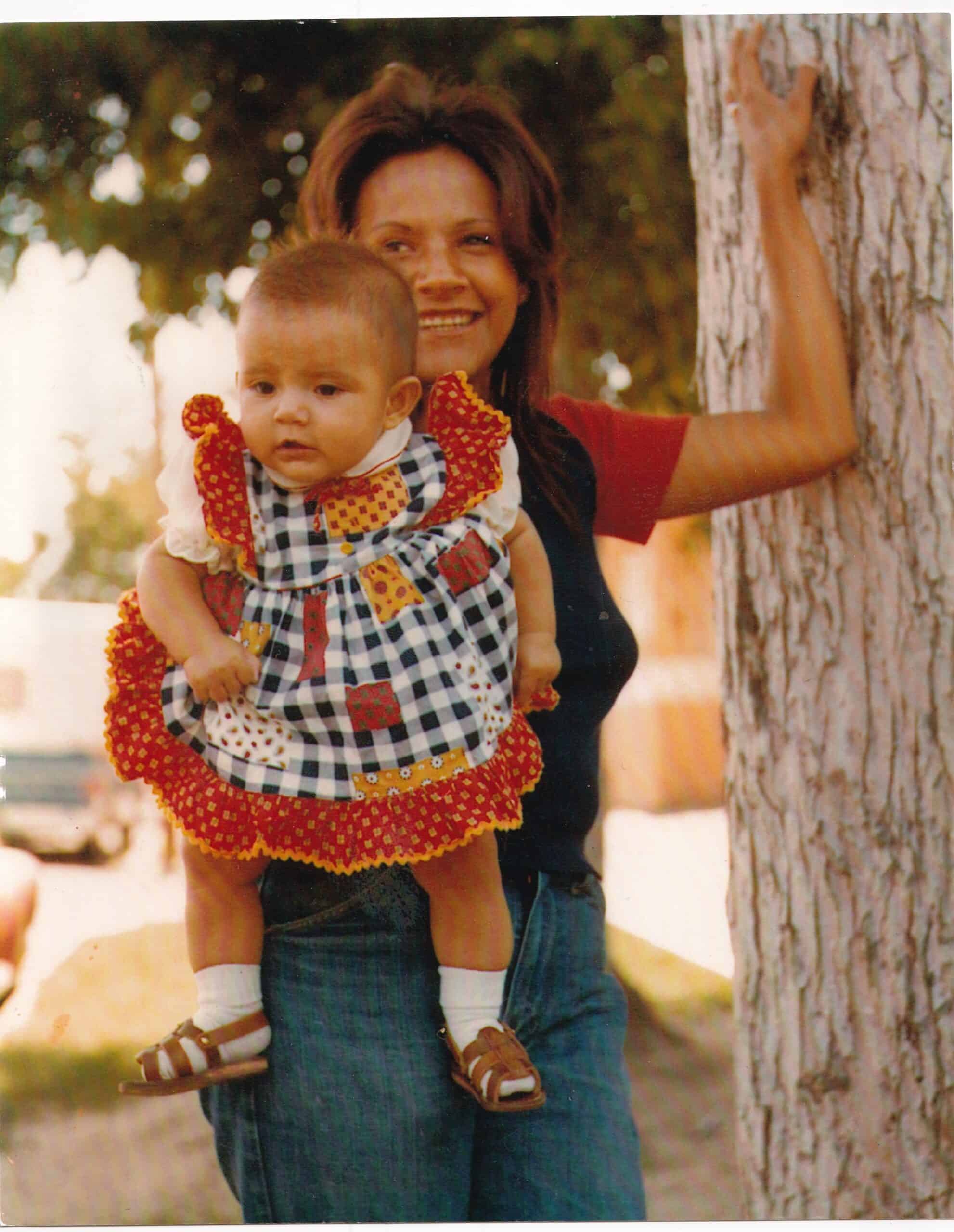
Calling La Alma “home” is a joy that can extend beyond long-time residents such as Ms. Prieto and Ms. Maestas by sharing that sense of belonging with their family for generations.
These Stories are part of the Collection
Community Voices: La Alma, Auraria and North Side, created by Lia Musante

Casa Mayan's History of Inclusion in Auraria
COLLECTION
Casa Mayan's History of Inclusion in Auraria
Just north of La Alma, Auraria’s working-class neighborhood of predominantly Hispanos, Mexican Americans, and Latinos experienced similar tensions between control imposed by systemic racism and celebrations of culture and interconnectedness in the community. In Auraria was Casa Mayan, one of Denver’s first Mexican restaurants and a cultural space for people to gather during the early days of the Chicana/o/x Movement.
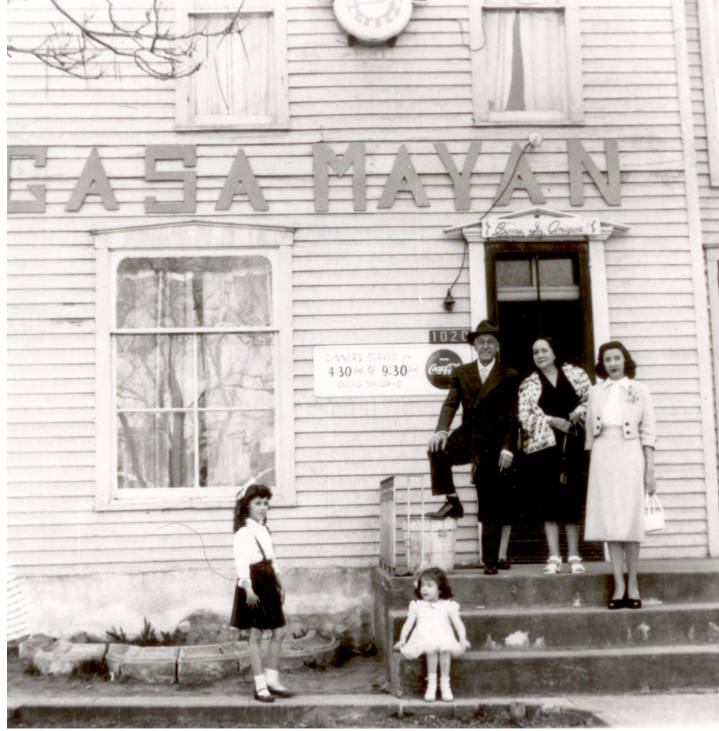
Mr. Alcaro’s grandparents stand on the front steps of Casa Mayan, next to a sign that reads “Dinners served from 4:30 PM til 9:30 PM Closed Tuesdays.” 1958. Photo courtesy of Gregorio González Alcaro.
After growing up in Auraria with his mother and grandmother running Casa Mayan, Gregorio González Alcaro spoke to me about how anyone was welcome inside and would be treated equally. A paper sign on the front of the house reads “In Lak’ech Ala K’in,” or “I am you, and you are me” in the Mayan language, as Mr. Alcaro’s grandfather was Mayan and fled Chihuahua during the Mexican Revolution.
Connecting with all different kinds of people (across race, socioeconomic class, gender, religion, etc.) was a core value for the matriarchs who ran the house:
“This house was extremely liberal in opening up to different people, and sharing and giving [but] the rules were very strict that when you came into that house, or at the table to share food, there was not going to be any gossip. You could share what you learned and ideas, but what was prohibited here was gossiping.”
Lucha Martínez de Luna
Listen
Lucha Martínez de Luna on the significance of murals

A collage of prominent actors, musicians, politicians, and otherwise notable individuals who visited Casa Mayan during its time as a restaurant starting in the 1940s until the 1970s. Collage courtesy of Gregorio González Alcaro.
Supporting others was so important that the women leaders of Casa Mayan instituted a no-gossiping rule as their own internal control of the community.
Auraria's Forced Displacement
In the late 1960s and early 1970s, Aurarians were forcibly displaced after city and state officials had been planning for years (without the involvement of residents) to create a consolidated college campus in place of Auraria’s neighborhood (Fairfield & Co. 2019).
Mr. Alcaro described that to justify the mass displacement, urban planners assessed Auraria through imposed standards informed by Western constructs of how a neighborhood ought to look. Despite a lack of investment in the neighborhood, Aurarians shared resources and actively maintained bonds with one another. Through practices such as an economic bartering system, there was practical interdependence. To urban planners, these internal systems were overshadowed by underfunded and deteriorating infrastructure:
"Physical decay is not social decay."
Gregorio González Alcaro
Audio
Gregorio González Alcaro on Auraria’s community networks and forced displacement
Instead of seeing the intricate systems in place that made Auraria’s thriving social fabric, city officials only saw it in the ways it lacked compared to White, wealthy neighborhoods. Planners then used these imposed standards to justify the construction of AHEC at the expense of the community’s connections and systems of mutual flourishing.
Since Auraria’s mass displacement, Chicana muralist Karma Leigh attended Metropolitan State University at the Auraria Higher Education Campus and told me that even though she loved the experience of studying there, Auraria’s history of displacement often goes unseen:
“A lot of people don’t realize or recognize that Auraria was really one of the first majorly gentrified neighborhoods in Colorado.”
Karma Leigh
Audio
Karma Leigh on Auraria’s displacement and gentrification
These Stories are part of the Collection
Community Voices: La Alma, Auraria and North Side, created by Lia Musante

Community Control as Resistance and Resilience
COLLECTION
Community Control
as Resistance
and Resilience
La Alma and Auraria residents built their internal systems for sharing power and control over their communities because racist forces controlling the neighborhoods were both ineffective and harmful.

The La Alma Park Pool
and community control
Mr. Martínez first moved to La Alma because of the neighborhood’s high density of Chicana/o/xs. He and other Chicano activists…
Listen to Emanuel Martínez on community control and the La Alma Park pool


Tactical actions
by the Brown Berets
Internal control of the community was a necessity within the context of police violence and other forms of systemic racism…
Listen to Andy Mendoza on the Chicano Movement and the Brown Berets
The La Alma Park Pool
and community control
Mr. Martínez first moved to La Alma because of the neighborhood’s high density of Chicana/o/xs. He and other Chicano activists…
Listen to Emanuel Martínez on community control and the La Alma Park pool
Tactical actions
by the Brown Berets
Internal control of the community was a necessity within the context of police violence and other forms of systemic racism…
Listen to Andy Mendoza on the Chicano Movement and the Brown Berets
The La Alma Park Pool and community control
Mr. Martínez first moved to La Alma because of the neighborhood’s high density of Chicana/o/xs. He and other Chicano activists sought to gain control over their own spaces, and started with the park’s pool, due to its predominantly White staff. Parks and Recreation reluctantly agreed to hire the activists because of recent mismanagement by pool staff.
Listen
Emanuel Martínez on community control and the La Alma Park pool
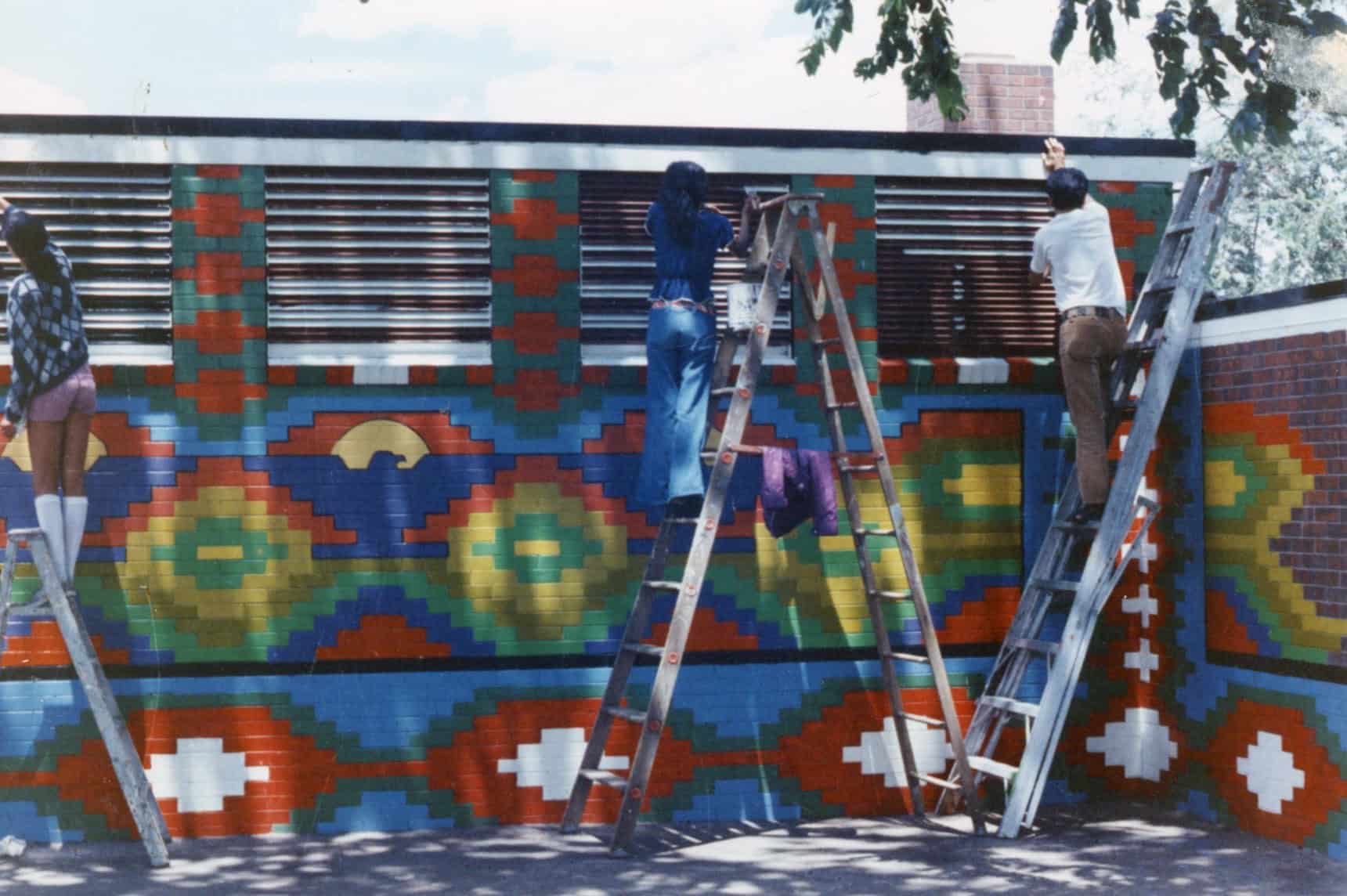
As a city employee, Mr. Martínez later painted murals around the pool. This form of community control used gaps in oppressive systems to residents’ advantage, minimizing the power of imposed control over the neighborhood.

Tactical actions by the Brown Berets
Internal control of the community was a necessity within the context of police violence and other forms of systemic racism. Storyteller Andy Mendoza talked about the role of revolutionary violence in asserting community control, saying:
“The Chicano Movement was a militant movement, they had to be, because cops had guns, and they’ll beat you up... But there was also a very peaceful movement. I was a part of the peaceful movement, a lot of my friends were what they call Brown Berets...”
Andy Mendoza
Listen
Andy Mendoza on the Chicano Movement and the Brown Berets
The Brown Berets—a national organization against police brutality that rose to prominence during the Chicana/o/x Movement—also created strategies to control public gatherings so police could not. In addition to working with elders and children in the community, they used tactics to control activism internally.
Storyteller Helen Giron-Mushfiq joined the Brown Berets with some friends 50 years ago, and she described pulling people in fights out of the crowd at protests as well as acting as security guards for well-known activists (including Russell Means, Angela Davis, and Dolores Huerta) visiting Denver.
Listen
Helen Giron-Mushfiq on the Brown Berets
Tactical collective actions like these challenged and reimagined the notions of safety furthered by police, and put into action a new system of safety and well-being that was on the community’s own terms.
Connecting with people in the neighborhood and providing them with resources to promote community safety is still a tactic Ms. Giron-Mushfiq uses. She mentioned that La Alma’s gentrifiers call the police on people selling drugs in the area and noted how that practice does nothing for the community:
“No, I’m sorry. Are you going to sell out your community? Just so the city will finally deal with these gangs? No, you’ve gotta be more creative than that.”
Helen Giron-Mushfiq
Listen
Helen Giron-Mushfiq on community safety and alternatives to policing
Instead, she put forth tutoring programs to offer space for people to learn skills for employment.
With creative alternatives, things seen as “problems” in the community are not merely eyesores that need to be fixed for the sake of individual gentrifiers, but instead, they are opportunities for people to transform and collectively thrive by sharing resources and building community. Not only are police ineffective and harmful, but there are other ways to go about the question of safety that can generate mutual flourishing across community members.
These Stories are part of the Collection
Community Voices: La Alma, Auraria and North Side, created by Lia Musante

The West Side’s Chicana/o/x Activism
COLLECTION
The West Side’s
Chicana/o/x Activism
Murals in the West Side can be further contextualized by the West High School Walkout and other Chicana/o/x activism starting in the late 1960s. Storytellers discuss their role in organizing, as well as how state violence and the press sought to silence it.

The West High School Walkouts
Storytellers Cathy Prieto and her daughter Desiree Maestas—both of whom grew up in La Alma—talk…
Listen to Cathy Prieto and Desiree Maestas on the West High School Walkout
Gathering in Parks and Police
Students asserting their need to learn their history and taking up space as a group was deemed a “threat” by…
Listen to Lucha Martínez de Luna on police control of parks in La Alma

La Alma Park Name-Change Riot
Civil Rights activist and muralist Emanuel Martínez told the story of the La Alma Park name-change riot…
Listen to Emanuel Martínez on the La Alma Park name-change riot
The West High School Walkouts
Storytellers Cathy Prieto and her daughter Desiree Maestas—both of whom grew up in La Alma—talk about how the neighborhood was predominantly made up of people of color in the 60s and 70s, the high concentration of police, and the violence police inflicted at the West High School Walkout of 1969. More than 1,200 Denver students demonstrated and demanded bilingual education, the firing of a racist teacher, and for Chicana/o/x history and culture to be included in the district’s curriculum (Fairhill & Co. 2019).
Listen
Cathy Prieto and Desiree Maestas on the West High School Walkout
“The cops tried to make it their deal that they’re gonna stop it, you know, you don’t start violence with a march, you don’t have to come out and beat the people, you talk to ‘em. Because they were just talking in bullhorns, the kids, and trying to get our point across that you know, we need culture in our schools.” Ms. Maestas “mhm'd” in agreement.
Cathy Prieto and Desiree Maestas
Gathering in Parks and Police
Students asserting their need to learn their history and taking up space as a group was deemed a “threat” by police. Many storytellers spoke about police inflicting violence when residents gathered in public spaces around the time of the walkout, such as Lucha Martínez de Luna when she talked about how the police controlled parks in La Alma:
“Sure, we could walk in the park, we could use the space, but it was very much controlled. A lot of times when you were walking through the parks, if there were more than five people congregated in the space, immediately police would come and start harassing you, asking what you’re doing, why are you here... So it wasn’t really a safe space for people in the community, but yet the parks were in their community.”
Lucha Martínez de Luna
Listen
Lucha Martínez de Luna on police control of parks in La Alma
Even though 80% of people living in La Alma were Chicana/o/x in 1970, the school curriculum and police treated residents as outsiders of their own neighborhood (2019). Racist forces sought to control, keep quiet, and isolate neighborhood residents.

La Alma Park Name-Change Riot
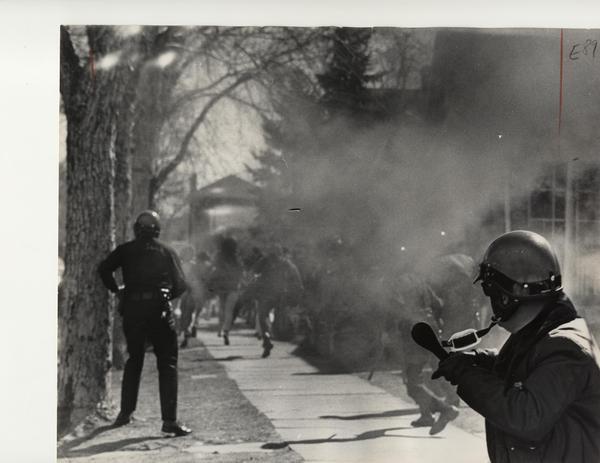
Civil Rights activist and muralist Emanuel Martínez told the story of the La Alma Park name-change riot, where police corralled and dropped tear gas from a helicopter on a crowd of celebrating residents who decided to change the name from Lincoln Park to La Alma Park, replacing a sign without city approval. Rocky Mountain News publicized residents as “hoodlums rioting,” and police denied using tear gas.
Listen
Emanuel Martínez on the La Alma Park name-change riot
When claiming ownership over and naming their own spaces, city officials felt a need to shut down residents’ gathering and made the neighborhood unsafe. Systemic racism in schools, parks, and police violence is important to understand the broader context of oppressive power in La Alma. Still, it does not singularly define Chicana/o/x residents of the 1960s or now.
These Stories are part of the Collection
Community Voices: La Alma, Auraria and North Side, created by Lia Musante

Mural Stories in Denver
COLLECTION
Mural Stories
in Denver
Chicana/o/x murals are a means to not only promote survival amidst systemic oppression, but also encourage residents to thrive by gathering together and publicly celebrating their cultural heritage.

Zapotec Designs in La Alma-Lincoln Park
In the late 1960s, activist and artist Emanuel Martínez painted one of his first public murals—a decorative…

Aztec Sunstone in Denver’s North Side
Andy Mendoza is another Chicano muralist who began painting murals in 1974 when a priest at his church…
The Significance of Denver’s Early Murals
In talking about the Chicana/o/x Mural Movement of the late 60s and early 70s Lucha Martínez de Luna…

ZAPOTEC DESIGNS IN LA ALMA-LINCOLN PARK
In the late 1960s, activist and artist Emanuel Martínez painted one of his first public murals—a decorative Zapotec design—outside his unit in the Lincoln Park Housing Projects, along with other building tenants.
For painting it without permission, the director of the Denver Housing Authority threatened to evict his family the same day. However, other residents watching the exchange between Mr. Martínez and the director shared responsibility for the mural:
“They said, well, if you kick him out, you have to kick us all out of here because we helped too…there was maybe 60 people out there, I mean he can’t throw us all out… I had the support of the people.”
Emanuel Martínez
Listen
Emanuel Martínez on Zapotec Designs
Tenants signed a petition and agreed they all wanted the mural, and people in nearby housing projects wanted him to paint murals on their buildings as well. Even though Mr. Martínez was not commissioned or formally approved to paint the mural, DHA waited until his family moved out to remove the paint because he had community support. Through collective power, housing project tenants could beautify the building and mark public space on their own terms.

Aztec Sunstone in Denver’s North Side
Andy Mendoza is another Chicano muralist who began painting murals in 1974 when a priest at his church, Our Lady of Guadalupe (one of Denver’s first Spanish-speaking churches that welcomed Mexicans) encouraged him to paint something embracing his culture:
“I went up to him one day and I said ‘I’m Spanish like you,’ and I do have Spanish blood in me, but not like him, and he said ‘No, no, you got a beautiful culture, go study your culture, come back and tell me what you want to paint.’”
Andy Mendoza
Listen
Andy Mendoza on Aztec Sunstone

Mr. Mendoza and his brother painted the image of an Aztec sunstone in the church’s rectory with black-light paints. People would visit the church at night to see the mural glowing through the windows. The United Farm Workers co-founder Cesar Chavez saw the mural when visiting Denver and asked Mr. Mendoza to paint murals at the UFW headquarters. Even though there were pressures to assimilate into Euro-centric culture, muralism served as a way to share and connect with cultures that existed well before the European colonization of the Southwest.
The Significance of Denver’s Early Murals
In talking about the Chicana/o/x Mural Movement of the late 60s and early 70s Lucha Martínez de Luna described how murals were rooted in the community’s rich and fluid history across time and from multiple points of view:
“There were different narratives being told, the murals were painted by the community… The idea of the murals… was about permanence, sense of place, being in this space, belonging to this space, and owning it.”
Lucha Martinez
Listen
Lucha Martínez de Luna on the Significance of Murals
The Chicana/o/x Mural Movement is a continuation of Indigenous traditions of storytelling, and includes everyone tied to the land and community.
These Stories are part of the Collection
Community Voices: La Alma, Auraria and North Side, created by Lia Musante

Community Voices: La Alma, Auraria and North Side

COLLECTION
Community Voices: La Alma, Auraria and North Side
Explore La Alma, Auraria and North Side, three neighborhoods in Denver, through the voices of eight storytellers deeply connected to these communities.
Created and curated by Lia Musante, this oral-history project brings together stories about murals, Chicana/o/x activism, community control, displacement, neighborhood change, intergenerational knowledge, and ways of remembering.
Explore the Stories ›

Mural Stories in Denver
Learn about some of the early murals painted in Denver by Chicana/o/x artists.
The West Side’s Chicana/o/x Activism
Hear storytellers describe their experiences of the Chicana/o/x Movement in the 1960s and 70s

Community Control as Resistance and Resilience
Learn how residents of La Alma and Auraria built their own systems for sharing power and exercising control within their communities.
Casa Mayan’s History in Auraria
North of La Alma, Auraria residents experienced mass displacement in the 1960s and 70s. Listen to stories of Casa Mayan, a community gathering place and Mexican restaurant that thrived for decades before Auraria’s displacement and redevelopment.


Ties to Space and Neighbors Amidst Gentrification
Hear long-time residents describe their experiences of and responses to changes in Denver’s West Side caused by urban development and gentrification.
Sharing Knowledge and Power with Young People
Storytellers share lessons from their activism with young people, carrying knowledge and connections to La Alma and Auraria across generations.
Ways of Remembering
How should the histories of the Chicana/o/x Movement and community organizing in La Alma and Auraria be represented and kept alive?
Explore Lia Musante’s project zine
Meet the Storytellers

Helen
Giron-Mushfiq

Andy
Mendoza

Gregorio
González Alcaro

Lucha
Martínez de Luna

Emanuel
Martínez

Karma
Leigh

Desiree Maestas
and Cathy Prieto

About This Project
My name is Lia, and from November 2021 until April 2022 I worked with a handful of long-time residents of La Alma and Auraria for this oral history project, where they discuss their experiences as a part of the neighborhoods, their past and current community organizing, as well as their desires and hopes for the future.
Above are descriptions and examples of what I and the residents see as major takeaways of the oral histories. La Alma and Auraria have a long and multi-layered history of residents connecting with one another in order to make-real their wants and hopes for the neighborhoods. Each storyteller’s unique experience and way of recollecting shed light on the multiplicity of histories surrounding La Alma and Auraria, but simultaneously, many stories share sentiments despite differences across generations and particular focuses in the communities.
This project was part of my undergraduate thesis in Sociology and Revolutions, with the goal of it being useful to ongoing community organizing in Denver. As an uninvited White settler, I grew up on Susquehannock, Piscataway, and Nentego (Nanticoke) land on the East coast and lived on Ute and Cheyenne land at the time of this project. In many respects I am not from the communities highlighted here, and I sought to account for how this work and my
perspective can perpetuate oppressive power structures, and I hope to leverage my privilege toward storytellers’ goals for the neighborhoods. As someone passionate about local community organizing, I have a great deal to learn from these storytellers and want to be intentional in making space for complexity in their stories and perspectives.
This project was made possible by the eight storytellers who trusted me with their lived experience and knowledge, as well as their insight on the direction of this work. I am grateful for their compassion and willingness to share and guide me. I am also thankful that this project can live on here and be put in conversation with Colorado’s Chicana/o/x mural movement!
To hear the stories and sentiments highlighted, listen along with this playlist of audio clips from the oral histories collected for this project:
Listen to the
Oral Histories
Oral histories conducted by Lia Musante in Denver, Colorado, 2021–2022. Part of Emanuel Project’s Mural Memory Archive.
Shared for public access and educational use. For reuse, contact Emanuel Project.
References
City of Denver Community Planning and Development. “Proposed La Alma-Lincoln Park Historic District.” City of Denver. Retrieved and adapted
May 3, 2022.
Fairhill & Co.. 2019. “La Alma Lincoln Park.” Denver, CO: Historic Denver, Inc.