

COLLECTION
Community Controlas Resistanceand Resilience
La Alma and Auraria residents built their internal systems for sharing power and control over their communities because racist forces controlling the neighborhoods were both ineffective and harmful.

The La Alma Park Pooland community control
Mr. Martínez first moved to La Alma because of the neighborhood’s high density of Chicana/o/xs. He and other Chicano activists…

Listen to Emanuel Martínez on community control and the La Alma Park pool


Tactical actionsby the Brown Berets
Internal control of the community was a necessity within the context of police violence and other forms of systemic racism…
Listen to Andy Mendoza on the Chicano Movement and the Brown Berets

The La Alma Park Pooland community control
Mr. Martínez first moved to La Alma because of the neighborhood’s high density of Chicana/o/xs. He and other Chicano activists…
Listen to Emanuel Martínez on community control and the La Alma Park pool
Tactical actionsby the Brown Berets
Internal control of the community was a necessity within the context of police violence and other forms of systemic racism…
Listen to Andy Mendoza on the Chicano Movement and the Brown Berets

The La Alma Park Pool and community control
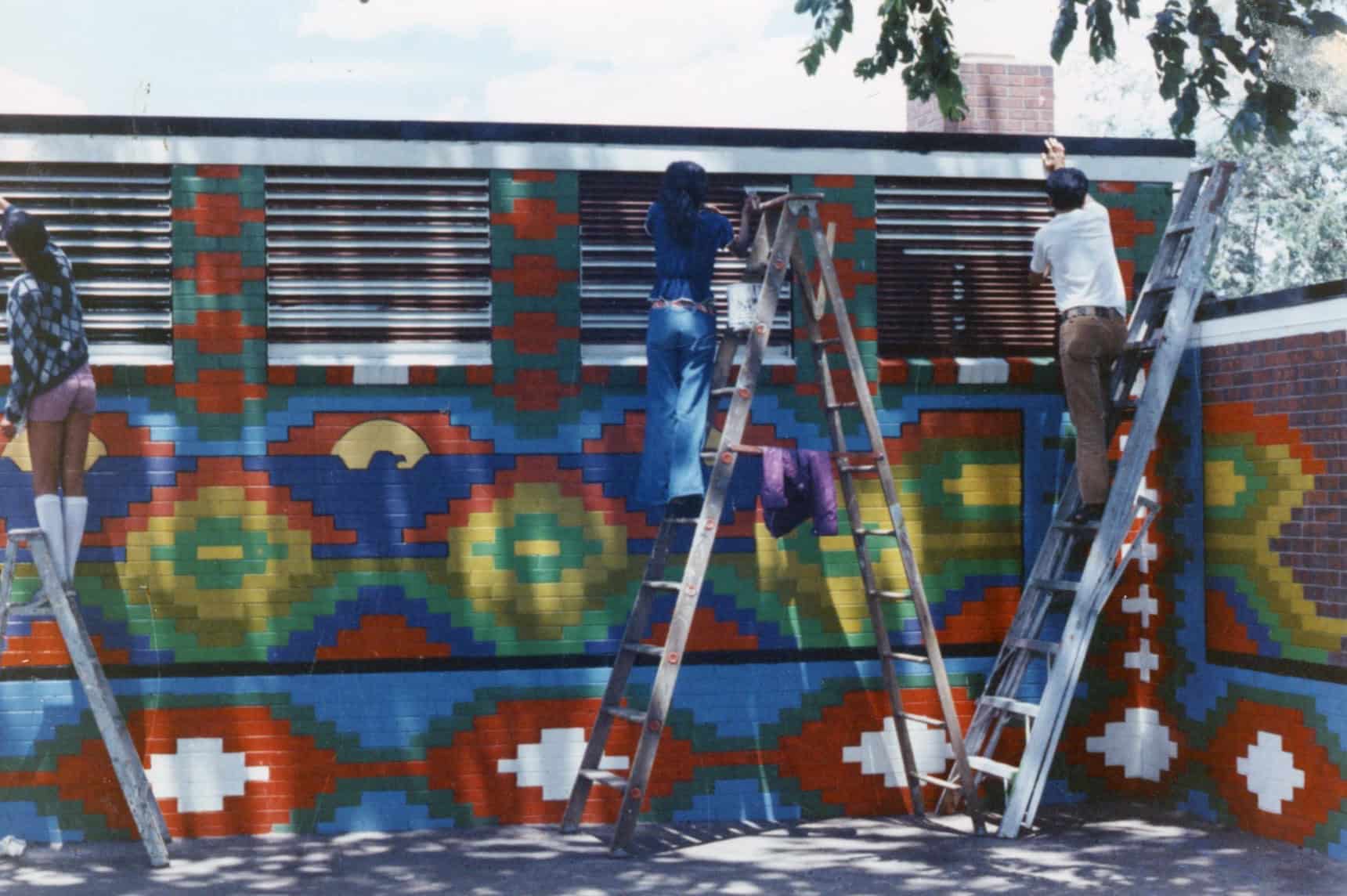
Mr. Martínez first moved to La Alma because of the neighborhood’s high density of Chicana/o/xs. He and other Chicano activists sought to gain control over their own spaces, and started with the park’s pool, due to its predominantly White staff. Parks and Recreation reluctantly agreed to hire the activists because of recent mismanagement by pool staff.
Listen
Emanuel Martínez on community control and the La Alma Park pool
As a city employee, Mr. Martínez later painted murals around the pool. This form of community control used gaps in oppressive systems to residents’ advantage, minimizing the power of imposed control over the neighborhood.

Tactical actions by the Brown Berets
Internal control of the community was a necessity within the context of police violence and other forms of systemic racism. Storyteller Andy Mendoza talked about the role of revolutionary violence in asserting community control, saying:
“The Chicano Movement was a militant movement, they had to be, because cops had guns, and they’ll beat you up... But there was also a very peaceful movement. I was a part of the peaceful movement, a lot of my friends were what they call Brown Berets...”
Andy Mendoza
Listen
Andy Mendoza on the Chicano Movement and the Brown Berets
The Brown Berets—a national organization against police brutality that rose to prominence during the Chicana/o/x Movement—also created strategies to control public gatherings so police could not. In addition to working with elders and children in the community, they used tactics to control activism internally.
Storyteller Helen Giron-Mushfiq joined the Brown Berets with some friends 50 years ago, and she described pulling people in fights out of the crowd at protests as well as acting as security guards for well-known activists (including Russell Means, Angela Davis, and Dolores Huerta) visiting Denver.
Listen
Helen Giron-Mushfiq on the Brown Berets
Tactical collective actions like these challenged and reimagined the notions of safety furthered by police, and put into action a new system of safety and well-being that was on the community’s own terms.
Connecting with people in the neighborhood and providing them with resources to promote community safety is still a tactic Ms. Giron-Mushfiq uses. She mentioned that La Alma’s gentrifiers call the police on people selling drugs in the area and noted how that practice does nothing for the community:
“No, I’m sorry. Are you going to sell out your community? Just so the city will finally deal with these gangs? No, you’ve gotta be more creative than that.”

Helen Giron-Mushfiq
Listen
Helen Giron-Mushfiq on community safety and alternatives to policing
Instead, she put forth tutoring programs to offer space for people to learn skills for employment.
With creative alternatives, things seen as “problems” in the community are not merely eyesores that need to be fixed for the sake of individual gentrifiers, but instead, they are opportunities for people to transform and collectively thrive by sharing resources and building community. Not only are police ineffective and harmful, but there are other ways to go about the question of safety that can generate mutual flourishing across community members.
